
Planning IT Security Training for Employees the Right Way
IT security training for employees lowers everyday risk. Here's how to plan content, formats, and processes for your company.
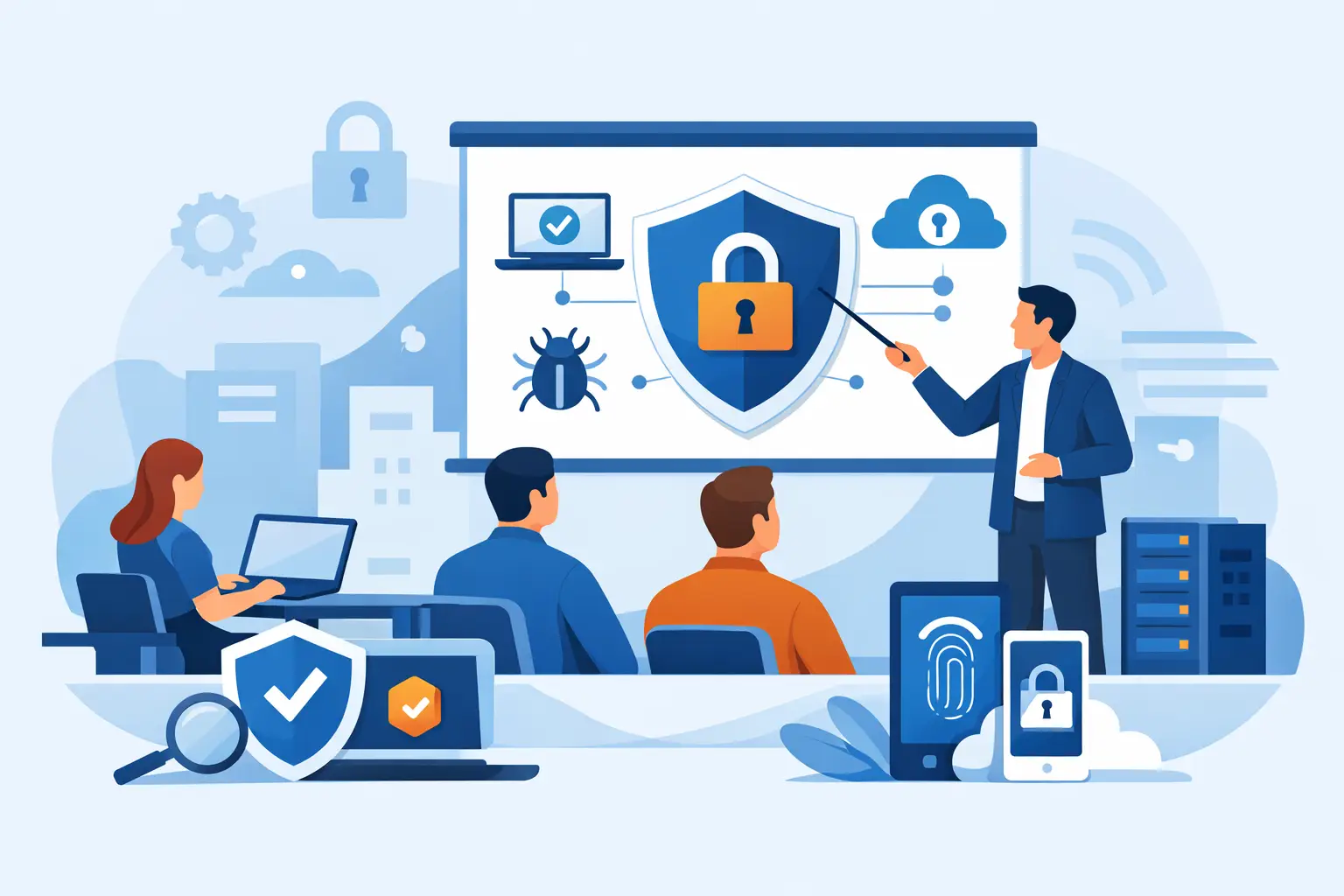
A single click on a well-crafted phishing link is often enough to redirect invoices, lose access credentials, or bring operations to a halt for hours. That's exactly why IT security training for employees isn't a side topic for someday — it's part of a reliable security concept within the company. Firewalls, antivirus, and backups matter, but if people act uncertainly in their daily work, a critical gap remains open.
Why IT Security Training for Employees Achieves So Much
In small and medium-sized companies, IT security is often closely intertwined with day-to-day business. Quotes are sent by email, invoices approved, customer data processed, access used on mobile devices, and files shared in the cloud. That's exactly where risks arise — not through spectacular hacker attacks, but through routines, time pressure, and a lack of orientation.
Good training therefore doesn't start with fear, but with the ability to act. Employees need to recognize the signs of suspicious emails, unsafe attachments, or unusual login prompts. Just as important is knowing what to do in an actual emergency. Reporting uncertainty early often prevents greater damage.
The benefit isn't purely technical. Companies also gain clarity in their processes, reduce support workload, and strengthen a sense of responsibility across the team. Especially with requirements around data protection, compliance, or NIS2, it becomes clear that security can't be handled by the IT department alone.
What Employees Really Need to Know in Practice
Many training programs fail because they stay too general. Employees don't need a theoretical lecture on the threat landscape — they need concrete orientation for their daily work. What matters is which situations actually occur within the company.
A sensible core almost always starts with phishing and social engineering. This includes fake invoices, supposed parcel notifications, password resets, or emails sent in the name of management. Anyone who recognizes these patterns makes better decisions before anything happens.
Just as important is secure handling of passwords and multi-factor authentication. In many businesses, habits have developed here out of convenience — simple passwords, shared logins, or sticky notes on the monitor. Training needs to address these points clearly, without putting employees on the spot.
On top of that come topics like working securely from home, using personal devices, mobile storage media, sharing settings in Microsoft 365 or other cloud environments, and handling sensitive documents. Depending on the industry, invoice approvals, supplier communication, or access rights can also play a central role.
IT Security Training for Employees: Standard or Individual?
It depends. Standardized training modules are often a good starting point because they cover fundamental risks and can be rolled out quickly. For many mid-sized companies, that's economically sensible, especially if there hasn't been any structured awareness training so far.
But once different roles within the company are affected, a one-size-fits-all format usually isn't enough anymore. Accounting faces different risks than sales. Management is particularly vulnerable to CEO fraud and targeted deception attempts. Field staff work mobile more often and need clear rules for devices, public Wi-Fi, and access on the go.
The best approach is usually a combination. A shared baseline training creates a common understanding. Individual departments then receive deeper content tailored to their tasks on top of that. That way, the training stays relevant and isn't perceived as just a box-ticking exercise.
How to Plan Training That Actually Lands
The first step isn't choosing a tool — it's an honest look at the current state. What incidents have already happened? Where does uncertainty exist? Which systems and working methods shape daily life? Answering these questions leads to more targeted planning and avoids unnecessary content.
Next come clear learning objectives. Employees shouldn't just know that phishing is dangerous. They should be able to recognize suspicious emails, report them, and, when in doubt, ask one more time rather than act. Good training programs spell out exactly these expectations.
When it comes to format: short, regular, and understandable beats long, rare, and abstract. A single annual session often feels more like a checkbox on a to-do list. Compact sessions spread throughout the year, supplemented by brief alerts during current fraud waves or internal changes, are noticeably more effective.
In-person training has the advantage that follow-up questions get answered directly. Digital learning formats are more flexible and easier to scale for distributed teams. Which option fits better depends on company size, working model, and available resources. In many cases, a mix of both formats makes sense.
Why Repetition Matters More Than Perfection
Secure behavior doesn't come from a single presentation. It comes from repetition, concrete examples, and reliable processes. Employees forget content if it isn't reinforced in daily work. That's not a sign of disinterest — it's simply human.
That's why IT security training for employees shouldn't be treated as a one-off measure. An ongoing process with short reminders, hands-on exercises, and clear reporting channels works better. Simulated phishing campaigns can also help, if used fairly. The goal shouldn't be to embarrass employees, but to create learning moments.
Company culture matters here too. If mistakes immediately lead to blame, incidents are more likely to be kept quiet. If reports are taken seriously and handled constructively, security improves noticeably. That's often exactly what makes the difference between a minor incident and greater damage.
Common Mistakes During Rollout
A common mistake is assuming that technology alone solves the problem. Even very good security solutions hit their limits if approvals are granted carelessly, credentials are shared, or warnings are ignored.
Training that's phrased too technically is just as problematic. Not every employee needs to understand exactly how an attack works in detail. What matters is which behavior is expected and why it's relevant.
Timing matters too. Training sessions dropped into particularly stressful periods often get lost in the noise. If they're embedded into existing processes instead — such as onboarding, team meetings, or regular security updates — acceptance rises noticeably.
Some companies also rely on one-off mandatory briefings without any follow-up evaluation. That leaves it unclear whether the content was understood or where further need exists. Anyone who takes effectiveness seriously reviews feedback, spots patterns, and keeps developing the training further.
The Role Leadership Plays
IT security doesn't start at reception and doesn't end in the server room. Leadership sets the tone. If management itself handles passwords carelessly, demands spontaneous exceptions, or dismisses security rules as a nuisance, every training program loses credibility.
Conversely, good role-model behavior has an immediate effect. When leaders use multi-factor authentication as a matter of course, follow approval processes, and ask questions about suspicious messages, security becomes part of the company culture. Employees take their cues from that more than many people think.
It's also important for decision-makers not to see training purely as a compliance checkbox. It's an investment in operational stability. The effort involved is modest compared to downtime, reputational damage, or a drawn-out incident response after a successful attack.
How to Tell Whether the Training Is Working
Success isn't measured by passed knowledge tests alone. It's more telling whether suspicious emails get reported more often, whether follow-up questions before risky approvals increase, and whether typical sources of error decrease. More attentiveness in daily work is a good sign — even if it initially means more reports coming in to IT.
Regular reviews also help: which topics are frequently misunderstood? Where do mistakes or uncertainty cluster? Which departments need more support? That way, training stops being a rigid mandatory program and becomes a learning system instead.
For mid-sized companies especially, it's worth having a partner who doesn't just deliver content but also supports structure, repetition, and integration into the existing IT security strategy. A regionally rooted service provider like WSV Systemhaus GmbH can take a pragmatic approach here — with solutions that fit the business rather than off-the-shelf theory.
Security Becomes Effective When It Fits Everyday Life
The best training isn't the one with the most slides — it's the one that leads employees to act correctly at the decisive moment. When suspicious activity is spotted early, uncertainty is voiced openly, and rules are understood without detours, security improves noticeably. That's exactly where real relief for your company begins — not through more complexity, but through clear, actionable steps.